
Consultation Held on Standard Implementation in the Livestock Sector
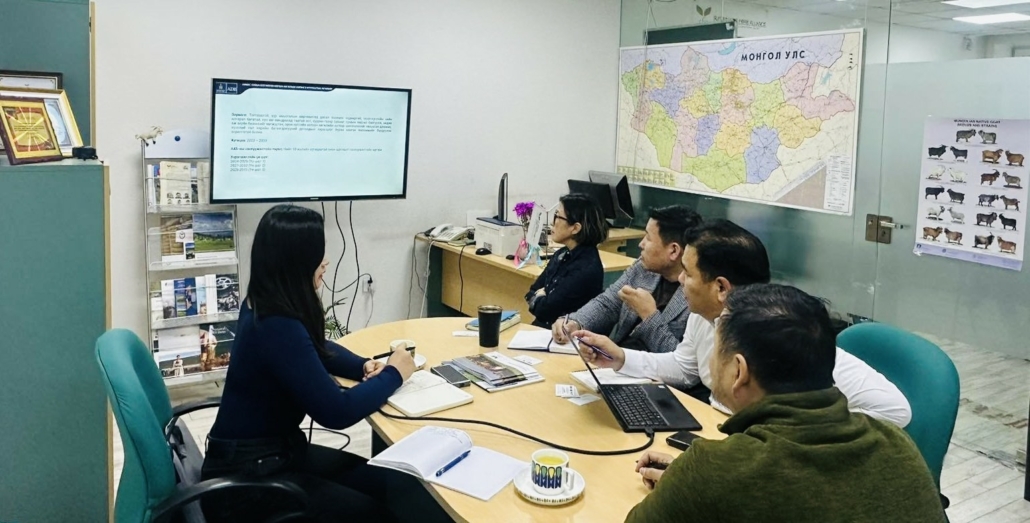
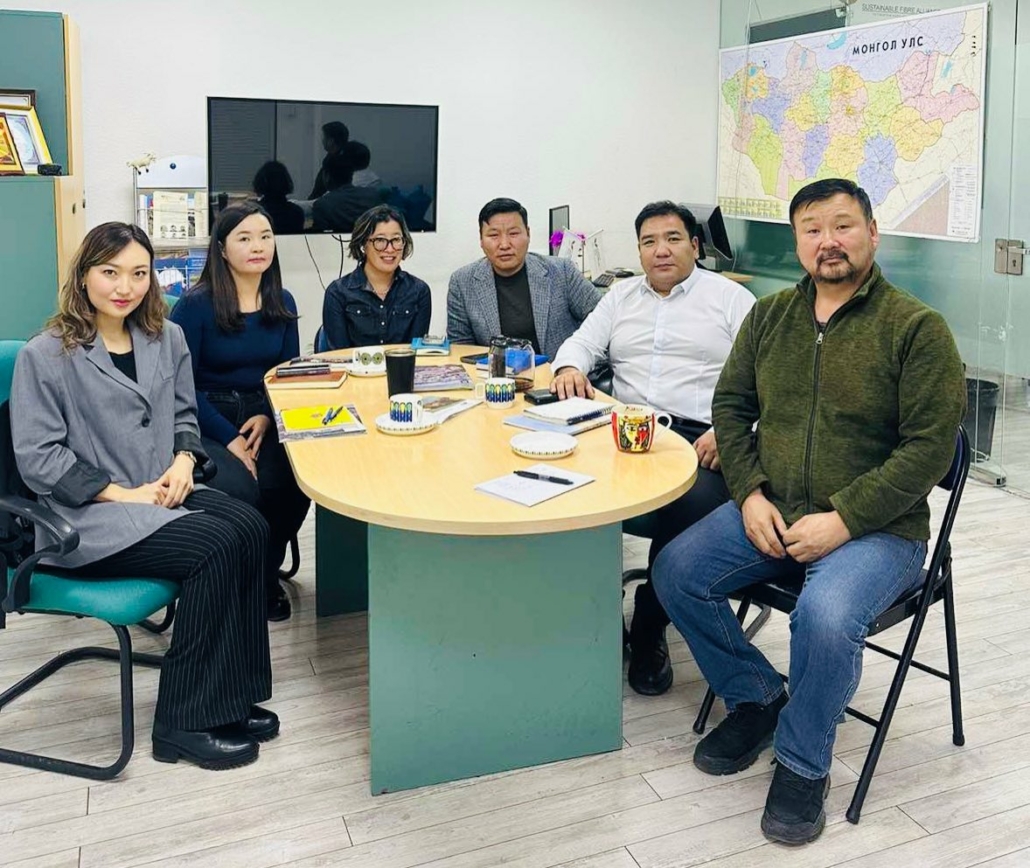
On 19 November 2025, specialists from the Project Implementation Unit of the Aimags and Soums Green Regional Development Investment Program (ASDIP) held a meeting with representatives of the Sustainable Fibre Alliance (SFA). During the meeting, the parties exchanged extensive information on the implementation of SFA’s revised Cashmere Standard—now updated as the Animal Fibre Standard—and its Chain of Custody Standard, as well as on potential areas for future collaboration.
During the discussion, the SFA team presented the scope of their global operations. SFA currently works with more than 19,000 herders through 208 cooperatives in Mongolia, about 16,000 farmers in the People’s Republic of China, over 5,000 herders in Afghanistan, and a wide network of 527 enterprises across 24 countries. Among these, 112 are full or supporting members, and 415 are participants in the Chain of Custody system. The meeting was attended by SFA’s National Coordinator S. Vandandorj, Operations Manager Indra, and “Resilience Threads” Project Manager B. Davaajargal, who introduced the updated contents of SFA’s core principles, including animal welfare, environmental protection, and social responsibility.
They highlighted that, starting from 2025, the revised standard is being applied to assessments of herder organizations under a new framework consisting of mandatory and improvement indicators, replacing the previous “gold, silver, bronze” tier system. SFA representatives shared best practices related to certification processes for herders, challenges in standard implementation among cooperatives and processing factories, and solutions for training, documentation, and monitoring systems.
The parties also discussed strengthening training, advisory support, and information linkages necessary for the successful adoption of SFA standards by cooperatives and processing enterprises. They explored potential loan mechanisms and criteria tailored for organizations that have successfully implemented the standards—mechanisms that could play an important role in supporting the transition to sustainable production, enhancing capacity, and improving competitiveness in international markets.
SFA further shared that, in cooperation with the Ministry of Labour and Social Protection, the “Herder” occupational standard was approved and officially incorporated into Mongolia’s National Classification of Occupations (NCO-08). As part of the certification of herder organizations, 61 cooperatives were audited on “Good Animal Husbandry and Cashmere Production Practices” and 34 cooperatives were audited on “Good Rangeland Management Practices,” with 59 cooperatives receiving satisfactory evaluation results—an important step in strengthening the foundation for sustainable production.
Additionally, SFA presented its collaboration with Nutag Academy, which included 1,000 artificial inseminations using Bayandelger breed bucks to improve cashmere quality, along with its ongoing provision of training, capacity-building, and third-party auditing services.
At the conclusion of the meeting, ASDIP and SFA identified several areas for future cooperation and agreed to implement them in a phased manner.

